Signed in as:
filler@godaddy.com

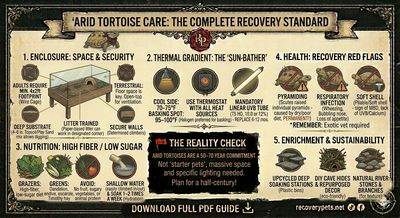
• Space: These are active, ground-dwelling animals. Adults require at least a 4x2ft footprint (minimum). Larger is always better.
• Security: Use a tortoise table (open-top enclosure) to ensure excellent air circulation. Ensure the walls are high enough that they cannot climb out (they are surprisingly determined).
• Substrate: 4–6 inches of a clean, moisture-retaining substrate like an organic topsoil/play sand mix. This allows them to burrow, which is vital for their mental health and temperature regulation.
• Basking Spot: 95–100°F.
• Cool Side: 70–75°F.
• Control: Use a thermostat with all heat sources. A halogen basking bulb is preferred.
• UVB: A high-quality linear UVB tube (T5 HO, 10.0 or 12%) is mandatory. These animals need strong UVB to synthesize Vitamin D3 for shell health. Replace bulbs every 6–12 months.
• The Diet: They are grazers. Their diet should be 90% leafy greens, grasses, and weeds (Dandelion greens, endive, escarole, collard greens, and dried orchard grass/Timothy hay).
• Avoid: No fruit, no sugary vegetables, and no animal protein. These cause digestive distress, obesity, and pyramiding of the shell.
• Hydration: Provide a shallow water dish they can easily climb in and out of. Soak your tortoise in shallow, warm water 1–2 times a week to ensure proper hydration.
• Pyramiding: If the scutes of the shell start looking like individual, raised pyramids, the animal has been kept too dry or fed the wrong diet. This is a permanent condition.
• Respiratory Infection: Bubbling at the nose, wheezing, or loss of appetite. Often caused by poor ventilation or drafts.
• Soft Shell: If the shell feels pliable or soft (especially in young tortoises), it is a sign of Metabolic Bone Disease (MBD) due to lack of UVB or calcium.
• Upcycling: Use large, shallow plastic bins or cut-down storage totes as deep soaking stations. Use smooth, clean river stones to create texture in the enclosure (but never tiny gravel, which they may ingest).
• Check our Starter Kits & Fundraiser page to see how we turn recycled materials into premium tortoise habitat components.
Arid tortoises are a 50–70 year commitment. They are not 'starter pets' and they are not fast. They are intelligent, long-lived animals that require a massive amount of space and very specific lighting. If you are not prepared to plan for this animal's care for the next half-century, do not adopt.