Signed in as:
filler@godaddy.com

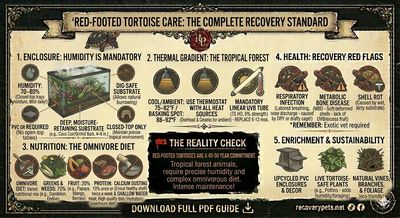
• Environment: Unlike arid species, these tortoises require a humid, tropical environment (70–80% humidity).
• Setup: Enclosures must be closed-top to trap moisture. Use materials like PVC or well-sealed wood to prevent rot. Avoid open-top tortoise tables, as they will dry out far too quickly.
• Substrate: Use 4–6 inches of moisture-retaining substrate such as coco coir or orchid bark. This helps maintain the required high humidity levels.
• Basking Spot: 88–92°F.
• Ambient Temperature: 75–82°F.
• Control: Use a thermostat with all heat sources. A combination of a ceramic heat emitter (for ambient heat) and a halogen basking bulb (for localized warmth) works well.
• UVB: A high-quality linear UVB tube (T5 HO, 6% strength) is required. They live in forest dappled light, so they do not require the extremely high-intensity UVB needed by desert species like the Sulcata.
• The Diet: They are unique among tortoises because they are omnivores.
• The Mix: 70% leafy greens and weeds, 20% fruit (papaya, mango, berries), and 10% high-quality protein (lean meat or soaked high-quality insectivore diet) once or twice a week.
• Hydration: Provide a large, shallow water dish. Soak them regularly to ensure they stay hydrated.
• Respiratory Infection: Labored breathing or discharge from the nose is often caused by an environment that is not humid enough or is too drafty.
• Metabolic Bone Disease (MBD): Symptoms include soft/deformed shells. This is often caused by a lack of proper UVB or excessive fruit intake without proper calcium supplementation.
• Shell Rot: Caused by sitting on damp, unsanitary substrate for too long. Ensure the surface of the substrate is kept clean.
• Upcycling: Use large, deep plastic storage totes (if properly converted) or repurpose old, clean furniture into custom enclosures that hold moisture well.
• Check our Starter kits & fundraisers page to see how we turn recycled materials into premium tropical habitats.
Red-Footed tortoises are a 40–50 year commitment. They are tropical forest animals that require precise humidity control and a complex, omnivorous diet. If you are unable to maintain a closed-top, high-humidity environment, this species will develop chronic respiratory issues. Please ensure you are prepared for the intensive maintenance required for this specific habitat.