Signed in as:
filler@godaddy.com

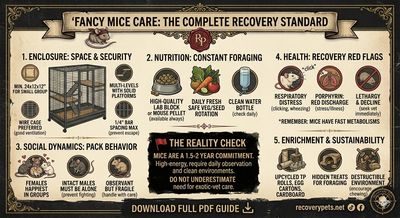
• Space: Mice are active explorers. Provide at least 24" x 12" x 12" for a small group, but larger is always better. Multi-level cages with solid platforms are ideal.
• The "No-Go" List: Avoid glass aquariums if possible, as they lack sufficient ventilation, leading to ammonia buildup that causes respiratory issues. Use wire cages with bar spacing no wider than 1/4" to prevent escapes.
• Substrate: Use paper-based, aspen, or hemp bedding. Never use cedar or pine shavings—the aromatic oils are toxic to their respiratory systems.
• The Base: A high-quality lab block or mouse-specific pellet should be available at all times.
• Fresh Rotation: Supplement with a daily rotation of fresh, bird-safe vegetables and small amounts of seeds/grains for foraging enrichment.
• Hydration: Provide constant access to clean water via a drip-free bottle.
• The Group: Mice are intensely social. Females should be kept in groups.
• The Male Exception: Intact male mice are highly territorial and must be kept alone to prevent aggressive fighting.
• Human Interaction: They are observant and can learn to trust their owners, but they are fragile. Handle with care and ensure they have plenty of hiding spots to feel secure.
• Respiratory Distress: Clicking, wheezing, or labored breathing is a medical emergency.
• Porphyrin: Red discharge around the eyes or nose is a sign of stress or illness.
• Lethargy: If a mouse stops moving, grooming, or eating, seek an exotic vet immediately—their metabolism is incredibly fast, and they decline quickly.
• Enrichment: Mice love "destructible" environments. Use toilet paper rolls, egg cartons, and clean cardboard boxes. Hide treats inside these items to encourage natural foraging behaviors.
• Check out our Starter packs & Fundraisers page to see how we turn recycled materials into premium rodent enrichment.
Mice are a 1.5–2 year commitment. They are high-energy, high-metabolism animals that require daily observation and clean environments. Do not underestimate the need for an exotic-trained veterinarian, as standard clinics are often unprepared for their specific medical needs.