Signed in as:
filler@godaddy.com

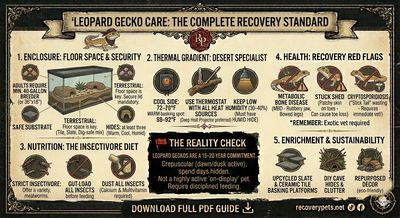
• Space: While juveniles can start smaller, adults require a minimum of a 40-gallon breeder tank (36"x18"). They are terrestrial—floor space is infinitely more important than height.
• Security: A secure lid is needed. They are not master climbers, but they can surprise you.
• Substrate: Use tile, slate, or a safe "dig-safe" clay/soil mix. Never use loose sand or calcium sand—leopard geckos lick their environment to taste it, and sand leads to fatal gut impaction.
• Basking Spot: 88–92°F.
• Cool Side: 72–76°F.
• Control: Use a thermostat with all heat sources. A deep heat projector or halogen bulb mimics the sun's warmth and provides deep tissue heating, which is ideal for digestion.
• Humidity: Keep low (30–40%). Provide a "Humid Hide" (a hide filled with damp sphagnum moss) at all times so the gecko can choose to go in when it needs to shed.
• Diet: Strictly insectivorous. Offer a variety of gut-loaded insects: Dubia roaches, crickets, and occasional mealworms.
• Supplements: You must provide calcium and multivitamin supplementation. If you don't supplement properly, they will develop Metabolic Bone Disease (MBD).
• Water: Always provide a shallow, clean dish of fresh water.
• Metabolic Bone Disease (MBD): Symptoms include rubbery jaw, bowed legs, or spinal kinks. This is caused by improper calcium/D3 levels. It is painful and permanent.
• Stuck Shed: If a gecko has patches of old skin stuck on its toes, it can cut off circulation, causing the toes to fall off. Monitor sheds closely.
• Cryptosporidiosis: A serious protozoal infection marked by "stick tail" (wasting away of the tail while the body remains thin). This requires immediate, specialized vet intervention.
• Upcycling: Use flat, broken slate or tiles (often free from construction leftovers) to create multiple levels and basking platforms on the floor of the tank.
• Check our Starter Kits & Fundraisers page to see how we turn recycled materials into premium reptile habitat components.
Leopard Geckos are a 15–20 year commitment. They are crepuscular (active at dawn and dusk) and spend their days hidden. If you are looking for an active, 'on-display' pet, this is not the right species. They require disciplined feeding, constant dusting of insects, and a clean environment.