Signed in as:
filler@godaddy.com

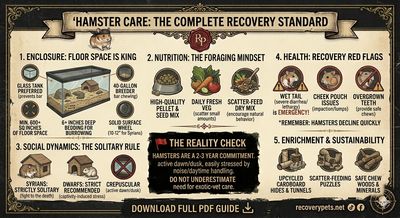
• The "Cage" Myth: Most commercial pet store cages are dangerously small. Hamsters are terrestrial, not climbing animals. They require a minimum of 600+ square inches of unbroken floor space (e.g., a 40-gallon breeder tank or a large bin cage).
• Bedding: Deep bedding (6+ inches) is required for burrowing—a primary natural behavior. Use paper-based, aspen, or hemp. Never use cedar or pine.
• The Wheel: Needs to be solid (no mesh/wire, which causes bumblefoot) and large enough to keep their spine straight while running (typically 10-12 inches for Syrians).
• The Base: A high-quality, pellet-based mix fortified with seeds and grains.
• Fresh Rotation: Small amounts of fresh vegetables (broccoli, cucumber) a few times a week.
• Foraging: Do not put all food in a bowl. Scatter-feed the dry mix across the enclosure to encourage natural foraging—this provides essential mental stimulation.
• Syrian Hamsters: These are strictly solitary. They are highly territorial and will fight, often to the death, if housed together. They must be kept alone.
• Dwarf Hamsters: While sometimes housed in pairs in the wild, captivity-induced stress makes this incredibly difficult. We recommend strict solitary housing for all species at Recovery Pets to avoid injuries.
• Wet Tail: A severe, stress-induced, and often fatal diarrheal illness in hamsters. If you see diarrhea, lethargy, or a hunched posture, this is an immediate, emergency-level visit to an exotic vet.
• Cheek Pouch Issues: Check for lumps that don't disappear (impaction) or foul odors (infection).
• Overgrown Teeth: Hamsters need safe, hard woods or mineral chews to keep their teeth worn down.
• Upcycling: Use clean, empty cardboard boxes as "hideouts" and tunnels. Because hamsters are constant chewers, cardboard is the ultimate sustainable, disposable, and free enrichment material.
• Check our Starter Kits & Fundraisers page to see how we turn recycled materials into custom hamster tunnel systems.
Hamsters are a 2–3 year commitment. They are crepuscular (active at dawn/dusk) and can be easily stressed by loud noises or frequent daytime handling. If you are looking for a pet that is active during the day, a hamster is not the right choice.