Signed in as:
filler@godaddy.com

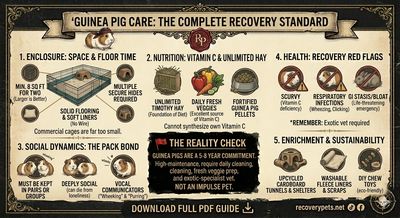
• Space: Guinea pigs need significant floor space to run. A minimum of 8 square feet (e.g., 2'x4' cage) is required for two, though larger is always better. Avoid commercial "starter cages," which are far too small.
• Flooring: They have sensitive feet and are prone to bumblefoot. Use solid flooring with soft fleece liners or safe, dust-free paper bedding. Never use wire-bottomed cages.
• Hideouts: As prey animals, they require multiple secure hides (tunnels, wooden houses) to feel safe.
• Hay (The Foundation): Unlimited Timothy hay is mandatory for healthy digestion and dental wear.
• Vitamin C: Unlike many other rodents, guinea pigs cannot synthesize their own Vitamin C. They require daily fresh veggies (bell peppers are excellent) and high-quality, fortified pellets to prevent scurvy.
• Hydration: Always provide fresh, clean water in a drip-free bottle or a heavy ceramic bowl (that they cannot tip over).
• Social Requirement: Guinea pigs are deeply social and can literally die from loneliness if kept alone. They must be kept in pairs or groups.
• Communication: They are very vocal! Listen for "wheeking" (their way of greeting you or asking for food) and "purring" (which can signal contentment or annoyance depending on the context).
• Scurvy: Symptoms include lethargy, joint swelling, and rough fur. This is preventable with proper diet.
• Respiratory Infections: Guinea pigs are prone to URI's. Listen for wheezing or clicking; it is an immediate vet visit.
• GI Stasis/Bloat: If they stop eating or seem lethargic, this is a life-threatening emergency.
• Upcycling: Use clean, fleece scraps or old (soft) towels to create washable, eco-friendly cage liners. Use large cardboard boxes for "pop-up" tunnels and shelters that can be recycled once chewed.
• Check our Starter Kits & Fundraisers page to see how we turn recycled materials into premium guinea pig habitat setups.
Guinea pigs are a 5–8 year commitment. They are high-maintenance, social creatures that require daily cleaning, fresh vegetable preparation, and an exotic-specialist veterinarian. If you are not prepared for the time and cost of their specific care, please do not adopt.